
If you were told that one-fifth of your workforce was struggling to perform because of a fixable infrastructure issue, you’d likely want to address it immediately.
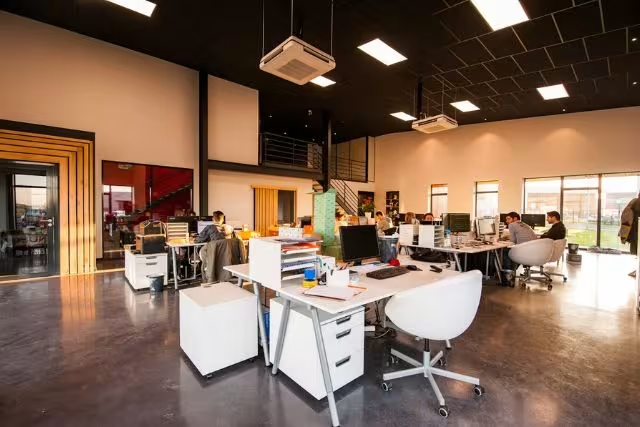
In the UK, it is estimated that up to 20% of the population is neurodivergent, which includes colleagues with ADHD, Autism, Dyslexia, and Dyspraxia. Yet, most modern offices are still designed around a “neurotypical” 1990s blueprint: open-plan desks, bright overhead lights, and a constant hum of background activity.
For a significant portion of your team, these aren’t just minor distractions. They are “sensory barriers” that actively hinder their ability to do the work you hired them for.
Have you considered the sensory cost of your space?
When we think about office “productivity,” we often look at software or management styles. But have you considered how the physical environment is impacting your team’s cognitive energy?
- The “Wall of Sound”: In an open-plan office, a single loud phone call or a clattering kitchen can be physically painful for someone with sensory processing sensitivities. Is there a place where they can truly “unplug” without wearing noise-cancelling headphones all day?
- The “Grid” Lighting: Many UK offices are flooded with high-intensity LED panels. While efficient, the invisible flicker and “cold” blue light can cause ocular fatigue and headaches, particularly for those with ADHD or Autism.
- The Lack of “Choice”: If the only place to work is a designated desk in a high-traffic area, you are forcing your team to spend 50% of their energy just “filtering out” the room before they even start their tasks.
It’s Not About “Special Treatment”, It’s About Universal Performance
The beauty of neuro-inclusive design is that it rarely benefits just one group. Have you ever noticed how much better everyone works in a space with natural textures, soft acoustics, and varied lighting?
Designing for the 20% actually creates a better environment for the 100%. When you offer “Sensory Choice”, different zones for different cognitive states, you aren’t just being inclusive; you’re being efficient.
Three Questions for Your Next Walkthrough:
If you are currently looking at a new office space or considering a refurbishment, ask yourself these three questions:
- Could I find a “Zen” moment here? Is there a zone with muted colours and acoustic privacy where a person can reset after an intense meeting?
- Is the lighting working for us or against us? Can the lighting be dimmed or adjusted to warm tones in specific areas, or is it “one-size-fits-all”?
- Does the layout force interaction, or allow it? Collaboration is great, but “forced” collaboration in a noisy environment is often where productivity goes to die.
Your office should be more than just a place to sit; it should be a tool that empowers every mind on your team.
If you’re viewing a new space soon, let’s make sure it’s the right one. Bluewood Interiors specialises in office design and fit-out services that bridge the gap between ‘standard’ workspaces and truly inclusive environments.
From your first viewing to the final handover, we’ll help you create a workplace where every individual, and your business, can thrive